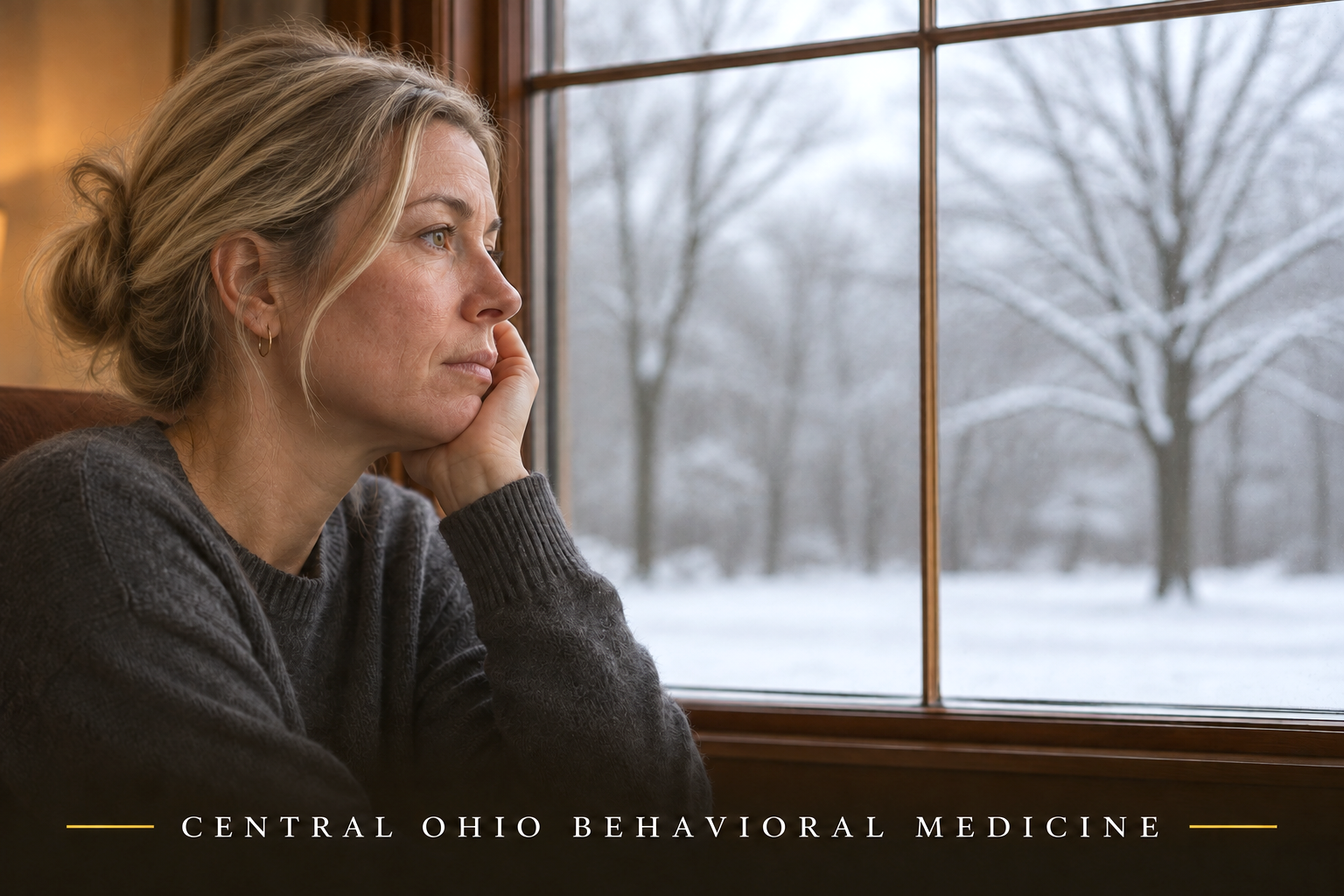
It’s getting dark before dinner and you’re noticing that your energy and mood don’t feel quite the same.
Getting out of bed takes more effort. By the time work ends, you would rather go home than do something you usually enjoy. You may wonder whether you’re simply tired or whether something more is happening.
For some people, these changes are temporary. For others, fall and winter bring a more persistent shift known as seasonal depression.
What Is Seasonal Depression?
Seasonal affective disorder, often called SAD or seasonal depression, is a form of depression that follows a recurring seasonal pattern. The more common winter pattern generally begins in fall or winter and improves during spring or summer.
It is more than disliking cold weather or missing sunny evenings. Depression can affect how someone feels and functions. A person may sleep longer but still feel exhausted, or find that things they usually enjoy no longer hold much appeal.
Recognizing a seasonal pattern means looking at what has happened over time, not simply how someone feels on a particular November afternoon.
How Shorter Days Can Affect Mood
Daylight helps set our internal clock, which influences when we feel awake and when we become sleepy. As daylight decreases, those rhythms can shift. For some people, this may contribute to changes in sleep and mood.
But the explanation is not as simple as “less sunlight causes depression.” Researchers are still studying why seasonal changes affect some people more than others.
Daily routines can change, too. We may spend less time outside or stop doing activities that gave us something to look forward to. Dark evenings can make the day feel finished before we have had much time for ourselves.
Is It Just the Winter Blues?
Feeling less energetic for a few days does not automatically mean someone has seasonal depression.
The important distinction is how persistent the changes are and how much they interfere with life. There is a difference between wishing the weather were better and struggling to get through responsibilities that usually feel manageable.
Holiday stress is another consideration. Financial pressure, difficult family situations or missing someone can make this time of year painful. Those experiences are not the same as seasonal depression, although both can happen together.
Understanding what is contributing to someone’s distress matters more than assuming everything comes from the season.
When a Change Deserves Attention
It’s easy to say, “I’m always like this in the winter,” and keep pushing through.
But a familiar pattern is still worth understanding. If your mood stays low or everyday life becomes harder to manage, the change deserves attention.
Sleep problems, medical conditions and other forms of depression can cause similar symptoms. A thoughtful evaluation considers what you’re experiencing now, how it has changed over time and what else may be contributing.
Treatments for seasonal depression are available. The appropriate approach depends on the person and their history.
You don’t have to figure out whether this is seasonal depression before talking about it. Recognizing that you haven’t been feeling like yourself is a reasonable place to begin.
Peter P. Zafirides, MD
Central Ohio Behavioral Medicine
This article provides general educational information and is not a substitute for individualized medical advice.