
We often talk about stress like it’s only an emotional experience, something we should manage with willpower or a positive mindset.
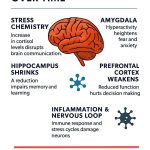
But chronic stress is far more than tension or worry. It leaves real biological marks throughout the brain.
👉 Cortisol rises and disrupts normal communication between regions.
👉 The amygdala becomes overactive, which heightens fear and anxiety.
👉 Inflammation builds and creates a loop that wears down neurons.
👉 The hippocampus begins to shrink, which affects memory and learning.
👉 Even the prefrontal cortex, the part that helps us plan, regulate emotions and make sound decisions, starts to weaken.
This is the reality of ongoing stress. It changes how the brain functions in ways we can measure. But the hopeful part is this: the brain can recover. Neuroplasticity allows these systems to rebuild when we give them the right support.
🔸 Three Ways to Lower Stress and Support Brain Healing 🔸
✅ Move Your Body Every Day
Even a short walk can calm the stress response. Movement lowers cortisol, supports the hippocampus, and strengthens the prefrontal cortex.
✅ Practice One Daily Nervous System Reset
Try breathwork, grounding or mindfulness. These techniques quiet the amygdala and reduce inflammation over time.
✅ Strengthen Connection
Talk to someone you trust or connect with a therapist. Healthy relationships buffer stress and protect brain regions involved in emotional regulation.
“The body keeps the score, but it also holds the power to heal.” – Bessel van der Kolk, MD
The brain is always adapting.
When we take small steps to reduce stress, those changes move in the right direction.
You can help your brain heal, one choice at a time.
Peter Zafirides, MD
Central Ohio Behavioral Medicine, Inc.
(For educational purposes only. Not medical advice.)