
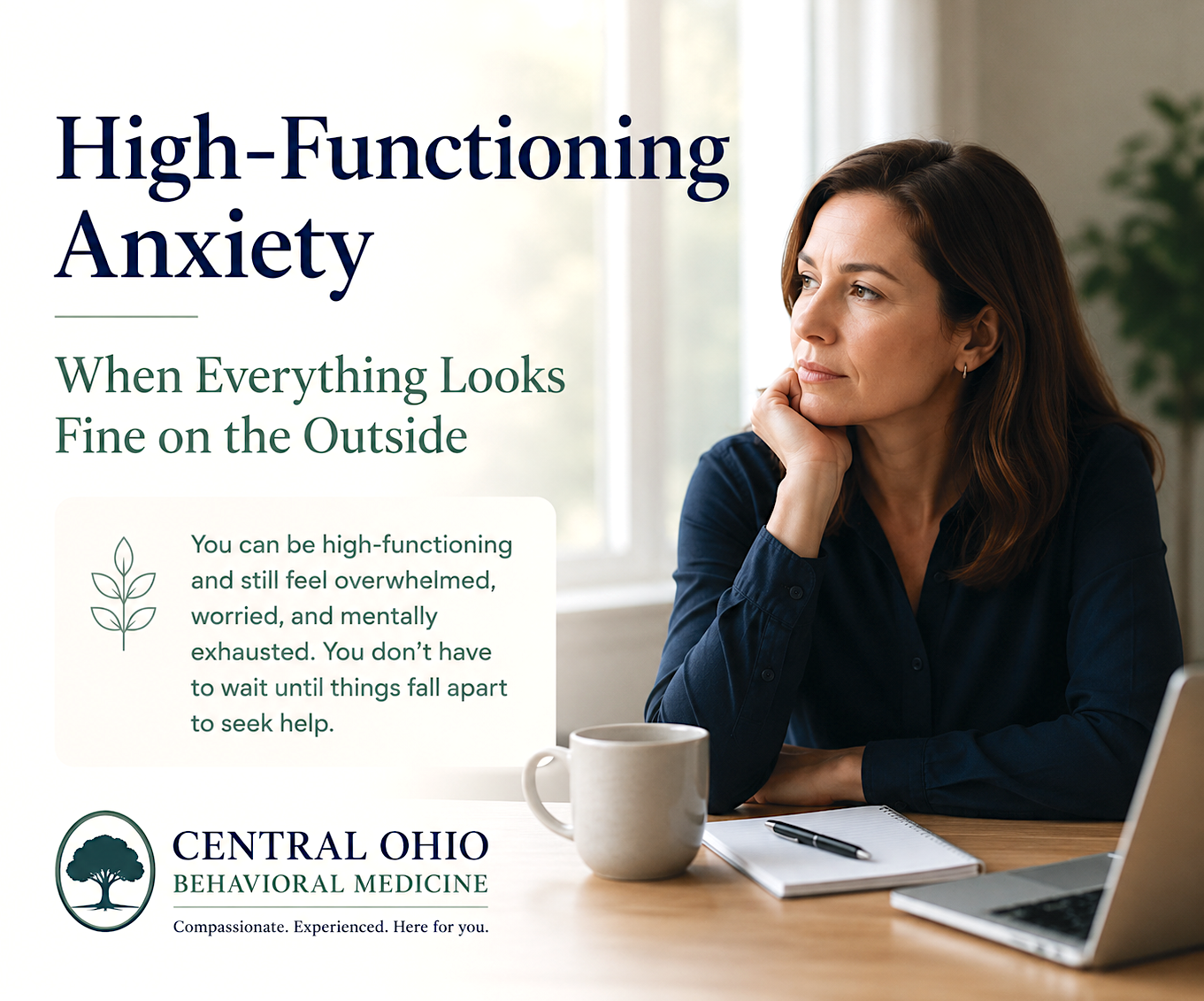
One of the biggest misconceptions about anxiety is that it is always obvious.
Many people imagine someone who is visibly nervous, unable to cope or struggling to get through daily life.
Sometimes that is true.
But after nearly 30 years of practicing psychiatry, I have learned that anxiety is not always easy to spot. In fact, some of the most anxious people I have ever treated looked perfectly fine from the outside.
They showed up to work.
They met deadlines.
They took care of their families.
They paid the bills.
They appeared successful, capable and in control.
Most people around them had no idea how much effort it took just to keep everything moving.
What often happens is that anxiety becomes hidden behind productivity. The person becomes the one who is always prepared.
Always responsible.
Always organized.
Always thinking three steps ahead.
Many people with high-functioning anxiety become known as the dependable one.
They anticipate problems before they happen.
They struggle to delegate because they feel responsible for making sure everything goes right.
They often find it difficult to relax because there is always one more thing that needs attention.
To others, these qualities may look like dedication and drive.
Internally, however, they can be exhausting.
What others do not see is the constant overthinking, the racing mind at night or the feeling that something could go wrong at any moment.
Many people become so accustomed to living this way that they begin to think it is simply part of their personality.
“This is just who I am.”
“I’ve always been this way.”
Sometimes there is some truth in that.
But sometimes anxiety has become so familiar that it no longer feels like anxiety.
One of the most rewarding moments in psychiatry is when someone realizes they do not have to live in a constant state of mental overdrive.
They can still be productive.
They can still be successful.
They can still care deeply about their responsibilities.
But they may be able to do so without carrying so much worry and pressure every day.
If you are functioning well on the outside but feeling overwhelmed on the inside, it may be worth paying attention to what your mind has been trying to tell you.
You do not have to wait until things fall apart before seeking help.
Peter P. Zafirides, MD
Central Ohio Behavioral Medicine