
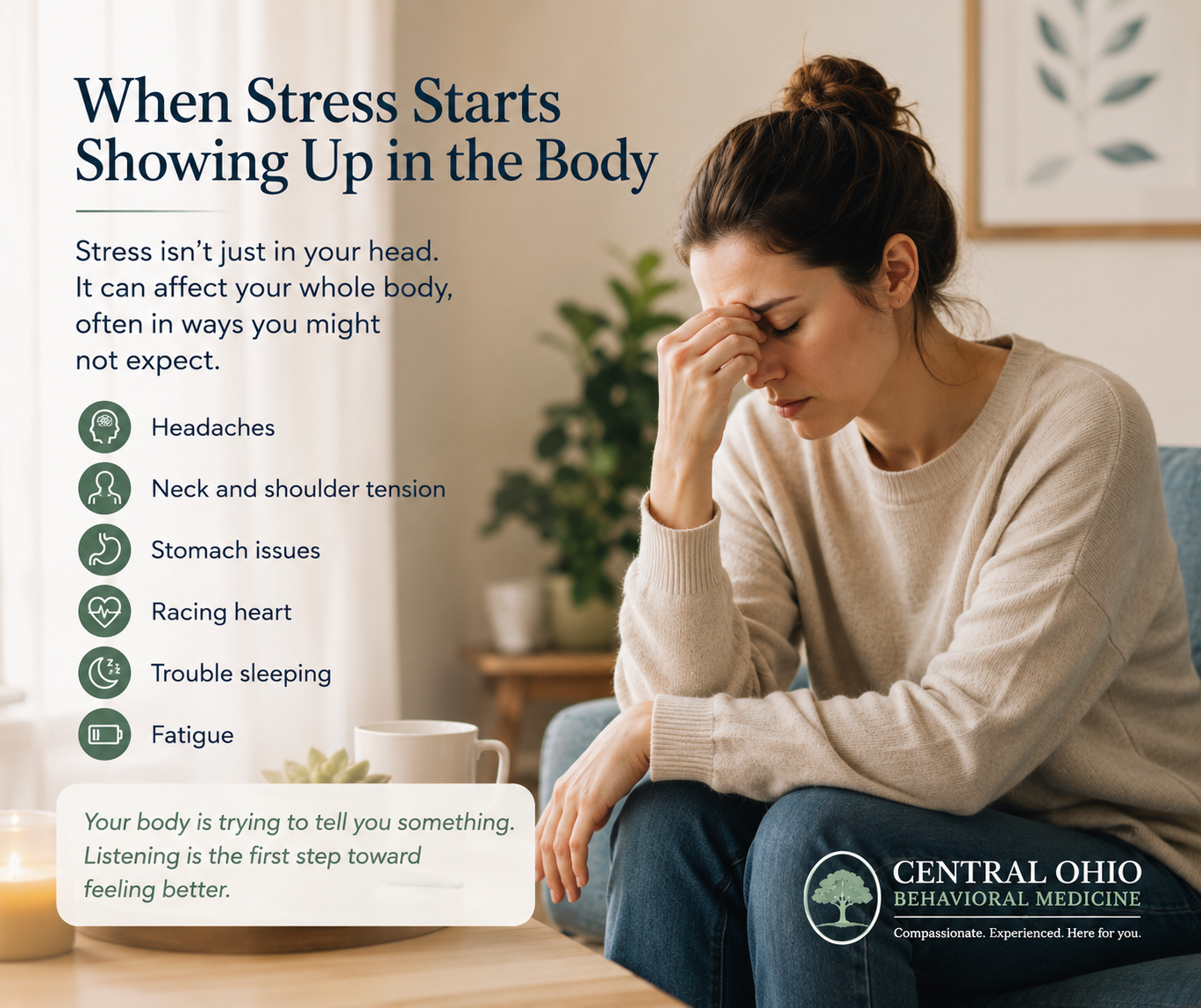
Most people think of stress as something that happens in the mind.
They picture worry, racing thoughts or feeling overwhelmed.
But after nearly 30 years of practicing psychiatry, I have learned that stress often shows up in the body long before people recognize it emotionally.
A person may come to my office complaining of headaches, neck pain, stomach problems, fatigue, poor sleep or muscle tension. They may have seen multiple specialists, undergone testing, and still have no clear explanation for why they do not feel well.
When I ask how things have been going in their life, I often hear:
“I’ve been under a lot of pressure at work.”
“My father has been sick.”
“I’ve been taking care of everyone else.”
“I haven’t really had a chance to slow down.”
Many are surprised when we begin discussing the possibility that stress may be contributing to what they are experiencing physically.
The connection between the mind and body is not imaginary. It is built into our biology.
When the brain perceives a threat, whether it is physical danger or emotional stress, the body responds. Muscles tighten. Heart rate increases. Sleep becomes disrupted. Digestion changes. Stress hormones are released.
These responses are helpful in short bursts. The problem is that modern stressors often do not last for minutes or hours. They can last for months or years.
Over time, the body may begin paying a price.
I have seen people develop chronic headaches, jaw clenching, gastrointestinal symptoms, fatigue, worsening pain and persistent sleep difficulties during periods of prolonged stress.
This does not mean the symptoms are “all in your head.”
The symptoms are real.
The pain is real.
The fatigue is real.
The body’s response is real.
What is often overlooked is that emotional strain can become one of the factors driving those physical symptoms.
One of the most important questions we can ask ourselves is not simply, “What is wrong with my body?”
It is also, “What has my body been carrying?”
Sometimes the answer involves grief.
Sometimes it involves chronic worry.
Sometimes it involves loneliness, burnout, or years of putting everyone else’s needs ahead of our own.
Recognizing the role of stress is not about blaming ourselves. It is about understanding ourselves more completely.
The body often speaks the language of stress long before we consciously recognize what is happening.
Learning to listen can be an important step toward healing.
Peter P. Zafirides, MD
Central Ohio Behavioral Medicine