
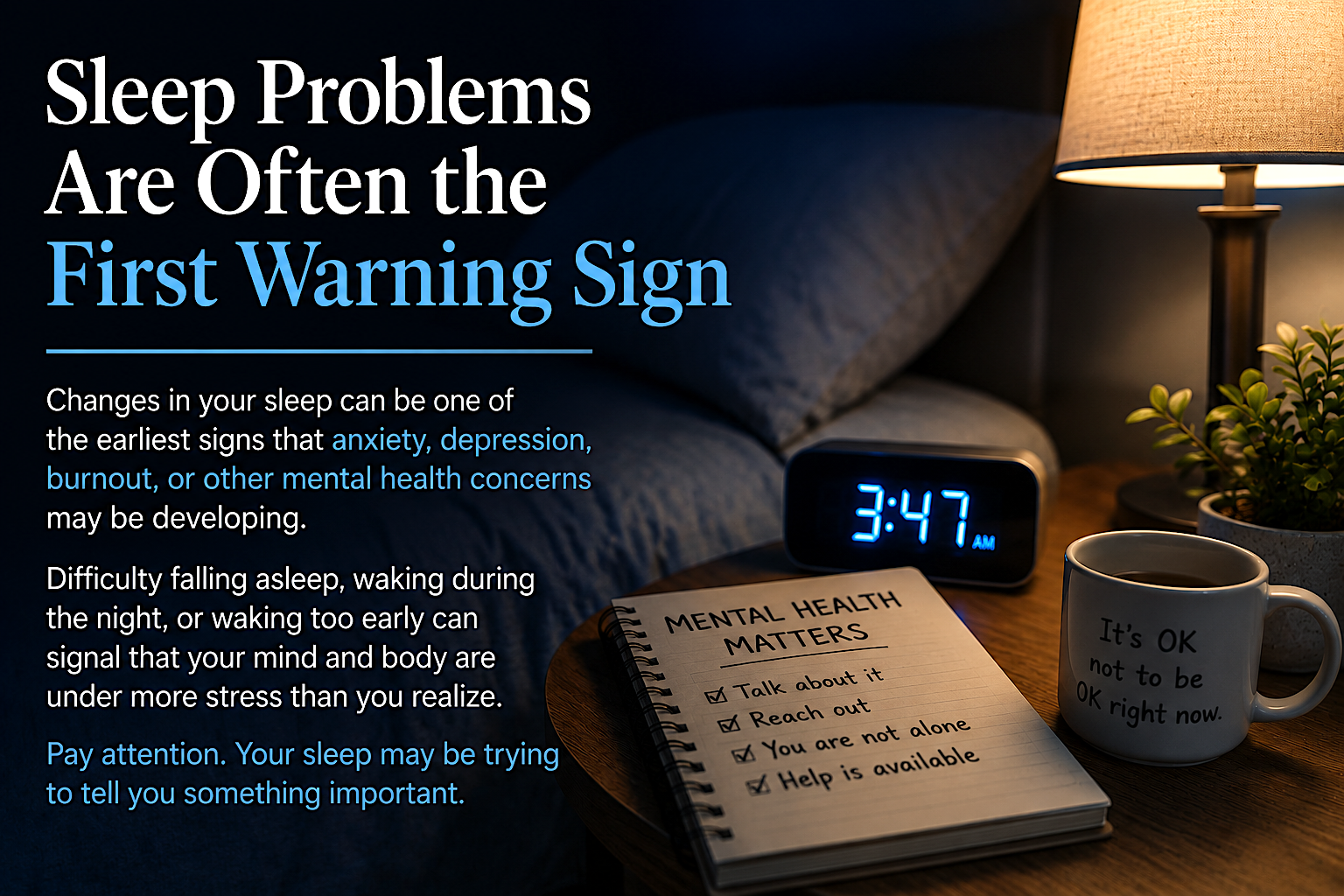
Many people assume the first sign of anxiety or depression is a change in mood.
Often though, it is a change in sleep.
Difficulty falling asleep, waking throughout the night or waking much earlier than usual can sometimes appear long before a person recognizes that their emotional health is being affected.
It is easy to assume these changes are simply part of getting older, having a busy life or dealing with everyday stress.
Sometimes that is true.
However, sleep changes are often among the earliest signs that anxiety, depression, burnout, grief or prolonged stress may be developing beneath the surface.
Sleep and mental health are closely connected. When the mind is carrying excessive worry, emotional strain or the early stages of depression, it can become difficult to fully rest. The brain remains alert when it should be settling down.
What makes this challenging is how often these changes are dismissed. Many people simply push through the fatigue and assume things will improve on their own. Over time, however, they may begin noticing increased anxiety, irritability, difficulty concentrating, loss of enjoyment, low motivation or a persistently low mood.
Looking back, the sleep disturbance was often the first clue that something was changing emotionally.
Not every sleep problem is related to mental health. Medical conditions, medications and sleep disorders can all play a role. But when sleep changes persist, they deserve attention.
At Central Ohio Behavioral Medicine, we encourage people to pay attention to changes in their sleep. Sleep is one of the body’s earliest warning systems. When it begins to change, it may be worth paying attention. Sometimes improving sleep is not just about getting more rest. Sometimes it is the first step toward understanding and addressing what is happening beneath the surface.
Peter Zafirides, MD
Central Ohio Behavioral Medicine