
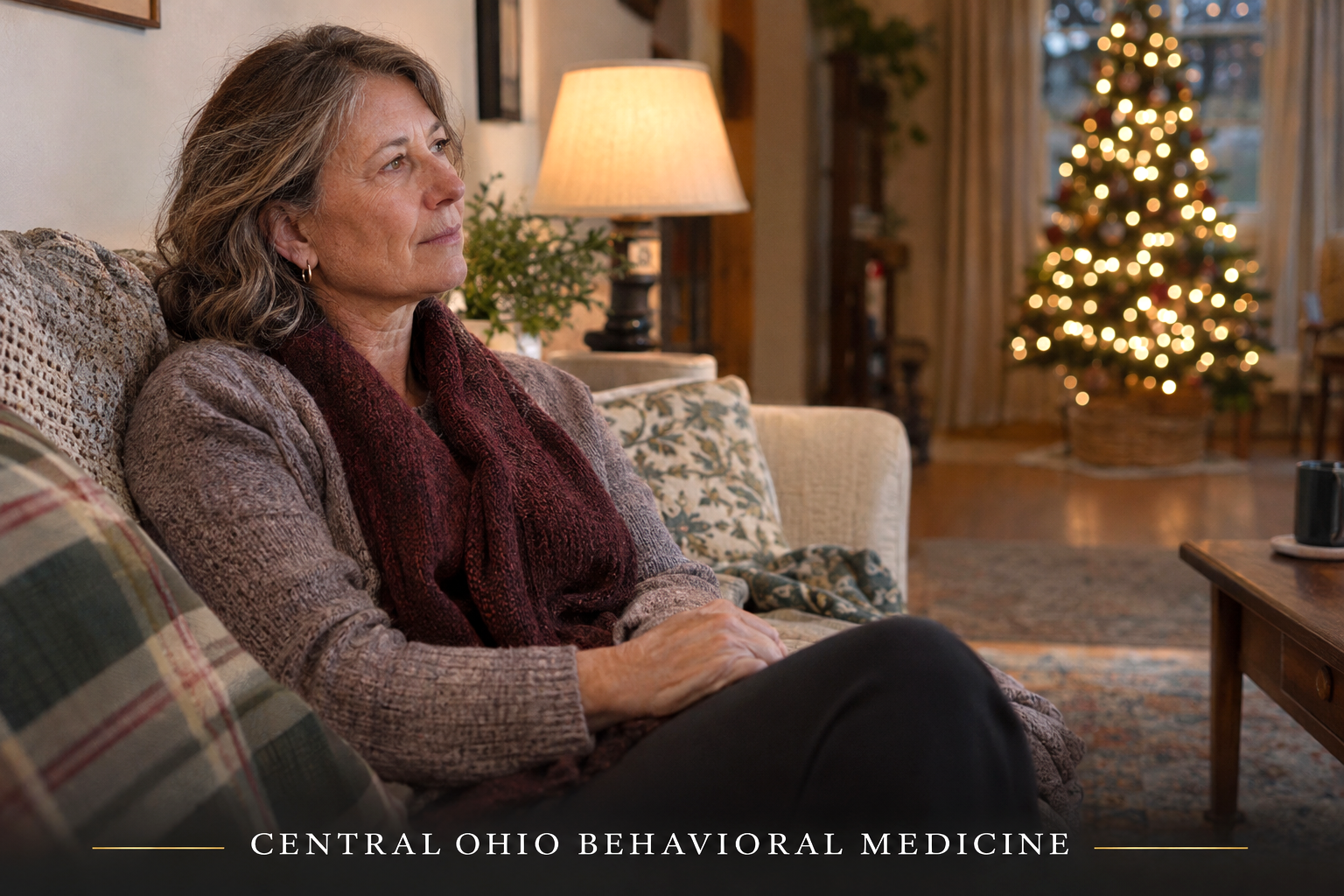
You may have been managing reasonably well. Then you start planning a holiday meal and realize, once more, that someone you love won’t be there.
The loss isn’t new. But in that moment, it feels painfully present.
Holidays can bring grief closer to the surface, even when a death happened years ago. That doesn’t necessarily mean something is wrong or that you have lost the progress you’ve made.
Familiar Traditions Can Make Absence More Noticeable
Much of what makes a holiday familiar involves other people. We remember who usually called first or how someone insisted on making a particular dish.
When that person is gone, the tradition may continue, but it feels different.
Sometimes the hardest moment is not the gathering itself. It comes earlier, when you briefly think about calling them before remembering that you can’t.
These reminders can be comforting as well as painful. A familiar recipe might bring back a good memory and leave you missing someone intensely. Neither feeling cancels the other.
Feeling Sadder Doesn’t Mean Starting Over
We often expect grief to become steadily easier with time. When sadness returns strongly, people sometimes wonder whether they should be further along.
But becoming more able to live with a loss does not mean becoming unaffected by it.
You may have rebuilt routines and found things to look forward to. A holiday can still bring you into close contact with what has changed. The sadness of that day does not erase everything that has happened since the loss.
The Pressure to Enjoy Yourself Can Make It Harder
Holidays come with expectations. People may be excited to gather or eager to keep things cheerful. You might worry that talking about the person who died will make everyone uncomfortable.
That can leave you trying to appear happier than you feel.
Families may also differ in how they want to remember someone. One person wants to continue every tradition. Another finds the same traditions difficult to face. Those differences do not necessarily reflect how much either person cared.
There isn’t one correct way to spend a holiday after a loss. What feels comforting this year may feel different next year.
When Grief Deserves More Support
A difficult holiday does not by itself mean someone has depression or a grief-related disorder.
Still, grief should not be dismissed simply because loss is part of life. Persistent distress that makes everyday responsibilities difficult, increasing isolation or a sense that life no longer feels manageable deserves attention. Grief and depression can also occur together.
Support may include a conversation with a mental health professional or a bereavement group. The purpose is not to persuade someone to stop missing the person who died. It is to understand what they are going through and what kind of help might be useful.
You can be glad to see the people gathered around you and still wish, deeply, that someone else were there.
Peter P. Zafirides, MD
Central Ohio Behavioral Medicine
This article provides general educational information and is not a substitute for individualized medical advice.